Hot Dip Galvanizing Equipment Engineered Around One Number: Your Annual Tonnage
Most hot dip galvanizing equipment is sold as a catalogue item and then forced to fit a plant it was never designed for. The result is familiar to every galvanizer: a zinc tank that is either too short for the longest workpiece or too wide for the tonnage, a crane cycle that bottlenecks the kettle, and an extraction system that passes its commissioning test and fails its first surprise inspection eighteen months later.
With 20 years of galvanizing experience and 90–100% of output exported, Xinlingyu builds the opposite way. Every line starts from the customer's workshop drawing, workpiece mix and target tonnage, and every tank, crane and extraction unit is sized backwards from those three inputs.
What a Complete Line Actually Includes
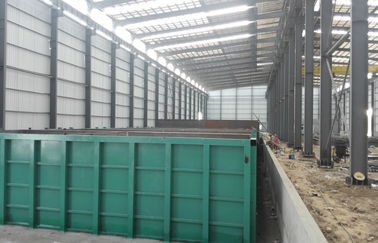
A 20,000 ton per year reference line delivered by Xinlingyu, built around a 7.0 × 1.2 × 2.2 m zinc tank in an 81 × 15.9 m workshop with a ring layout:
| Process Stage | Equipment | Dimension (L × W × H) |
|---|
| Degreasing | Degreasing tank | 7.0 × 1.3 × 2.2 m × 1 |
| Pickling | Acid pickling tank | 14.0 × 1.3 × 2.2 m × 3 |
| Fluxing | Flux tank + de-ironing unit | 7.5 × 1.3 × 2.2 m × 1 |
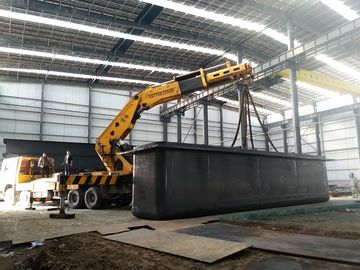
| Galvanizing | Zinc tank + heating furnace | 7.0 × 1.2 × 2.2 m × 1 |
| Cooling / Passivation | Water cooling and passivation tanks | 7.0 × 1.3 × 2.5 m × 2 |
| Handling | Ring type crane, 6 hoists, 2 t each | 10 m lift, explosion-proof |
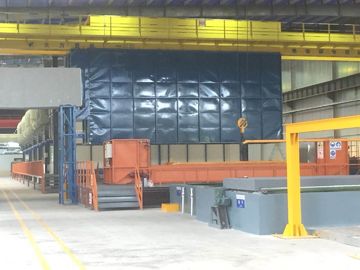
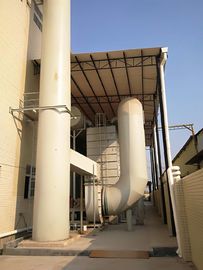
| Environment | Acid fume closed room and treatment towers | 61.0 × 3.8 × 6.5 m |
High-Speed Pulse Heating: The Difference Between a Kettle and a Consumable
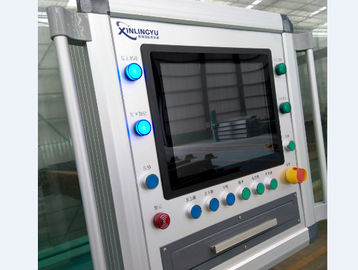
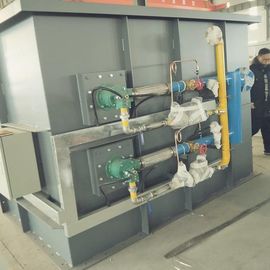
The zinc tank is the single most expensive wear part in the plant, and its life is decided by how evenly it is heated. Xinlingyu lines use high-speed pulse firing under PLC control, with dual K-type thermocouples reading both furnace zone and liquid zinc temperature and correcting the set point automatically as the bath approaches target.
| Parameter | Value |
|---|
| Zinc liquid working temperature | 435–450 °C, tolerance ±2 °C |
| Furnace (flue) temperature | ≤ 650 °C, wall ≤ 50 °C |
| Heating uniformity across furnace body | ±2 °C |
| Burners | 2 × 450 kW, consumption 30 kg/hour |
| Full-power heat-up rate | 60–200 °C/h, adjustable to a set curve |
| Zinc capacity in tank | 282 tons (110 t at 7.0 × 1.2 × 2.2 m, 60 mm wall) |
Because the furnace never overshoots, the dross layer stays thin and the kettle wall is not thermally cycled. The system also includes a zinc leakage alarm and a dedicated leakage collection pit — a detail buyers rarely ask for until they have lived through a leak.
Emission Control Designed to Survive an Unannounced Inspection
- Acid fume: closed fume room plus two-stage PP washing towers; HCl in treated tail gas < 100 mg/m³, emission rate < 0.43 kg/h, compliant through a 20 m chimney. The first water-spray tower recovers dilute HCl for rack cleaning, which then forms zinc chloride usable in the flux — abatement that pays part of its own cost.
- Zinc smoke: closed collection hood with negative pressure and electric end doors; capture efficiency above 95%, solid particles in exhaust below 90 mg/m³, blackness grade 1.
- Waste acid: neutralization system returning treated water to production instead of draining it.
Waste Heat Recovery: 10% Off the Fuel Bill, Every Year
Flue gas from the galvanizing furnace is routed through a titanium-tube heat exchanger that holds the flux bath at 60–70 °C automatically. Reusing exhaust to preheat combustion air cuts fuel consumption by roughly 10% — on a 20,000 ton line, that is one of the fastest paybacks in the whole project. The same heat loop eliminates a separate flux heating circuit.
Utility Budget You Can Plan Before You Sign
| Utility | Requirement |
|---|
| Connected electrical load | Max. 230 kW |
| Water | 0.01 m³ per ton, supply pressure ≥ 0.2 MPa |
| Compressed air | 3 m³/min at 0.5 MPa |
| Fuel | Furnace oil, natural gas or LPG burner sets |
From Drawing to Commissioning, One Team
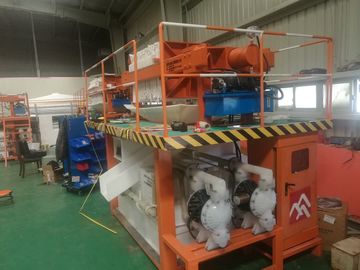
Xinlingyu engineers handle the investment scheme and model selection, provide free equipment layout and factory planning, issue foundation drawings, and support civil works on site. Installation, commissioning and operator training follow in the same contract, so the line is handed over running at its rated tonnage rather than waiting for a third-party integrator.
Send your workshop drawing, workpiece mix and target annual tonnage, and the engineering team will return a customized hot dip galvanizing equipment proposal with layout, utility schedule, emission guarantees and a firm delivery plan.


 يجب أن تكون رسالتك بين 20-3000 حرف!